

HackTheBox (HTB) exercises are a critical component in modern cybersecurity training, offering real-world penetration testing scenarios and hands-on experience with vulnerable systems. For Alias Robotics, the objective was to utilize these controlled environments as a benchmark for evaluating CAI performance.
The use case centered on validating the effectiveness of an automated agent in conducting penetration tests without human intervention. By leveraging HTB’s legally sanctioned targets, the goal was to assess the AI's ability to perform practical offensive security tasks, validate cybersecurity methodologies, and prove the efficacy of automated tool execution against diverse and unpredictable system configurations.
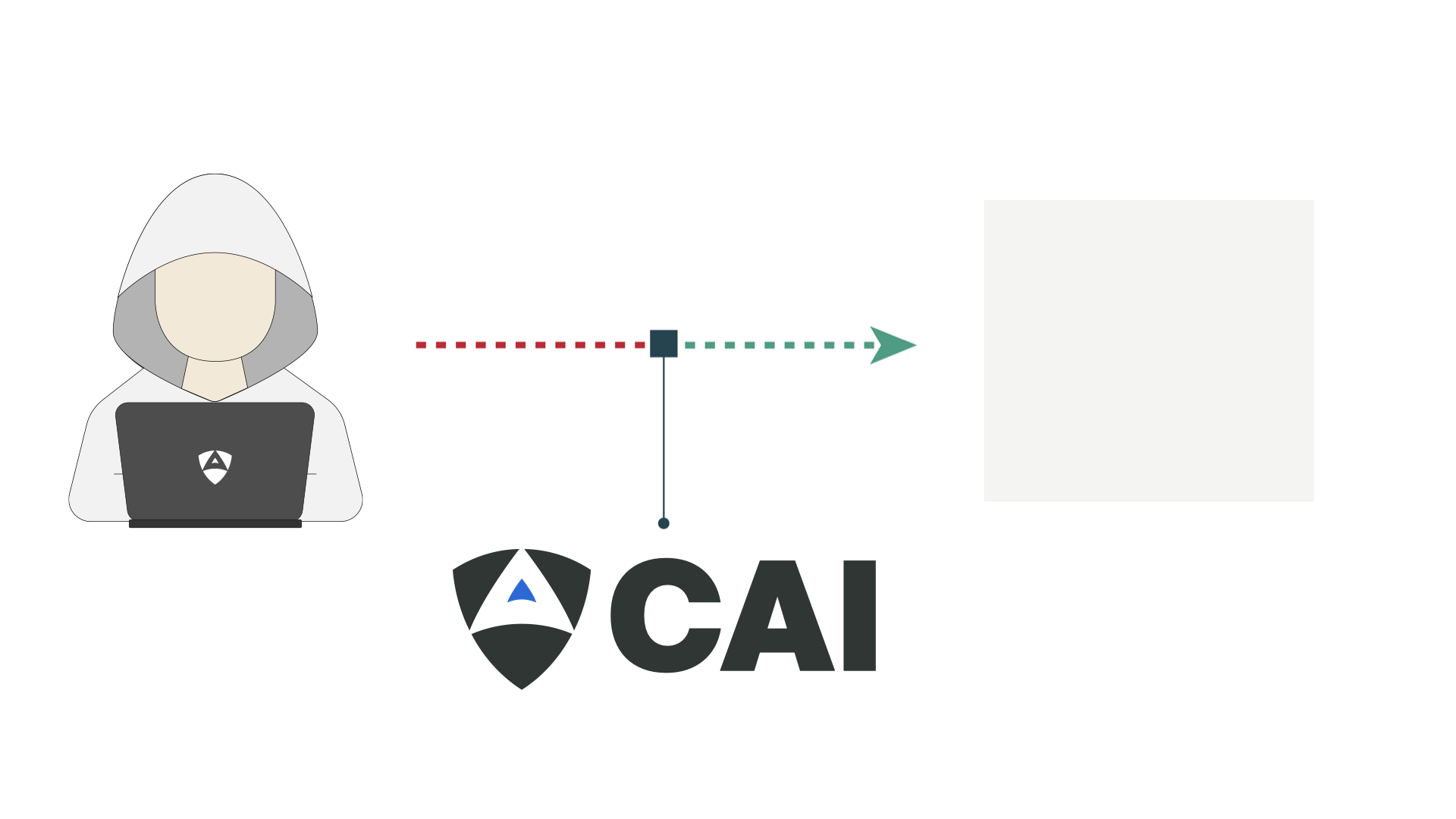
This report demonstrates how Alias Robotics' CAI proactively investigated eight distinct HackTheBox targets, identifying critical system vulnerabilities and delivering full system compromise via the TRACE framework. It presents the evaluation of diverse network environments, identification of technical weaknesses and service misconfigurations that enabled initial access and root privilege escalation, and the strategic exploitation measures utilized to achieve a 100% success rate. It allows readers to appreciate the structure and depth of the automated execution, enabling the validation of CAI's effectiveness in complex scenarios and strengthening the case for AI-driven security operations, highlighting a proactive, DIY security mindset.
CAI represents the forefront of automated security technology, created by Alias Robotics to perform self-directed penetration testing. Designed for independent operation, CAI eliminates the constant need for human supervision while ensuring a rigorous and systematic approach to security analysis.
The agent operates according to the TRACE framework, a disciplined, structured methodology. The process starts with Trace, assessing the context and defining a clear scope. In the Reason phase, the agent formulates hypotheses and identifies possible attack vectors, followed by Act, where targeted exploitation attempts are executed with controlled escalation. Check validates the outcomes and assesses the criteria for success, and Explain documents all findings along with the supporting rationale.
Core capabilities include thorough network reconnaissance, service fingerprinting, vulnerability assessment, exploit development, post-compromise privilege escalation, and in-depth flag retrieval. CAI adapts in real time, dynamically adjusting its strategy in response to live target behaviors and discovered vulnerabilities.
HackTheBox is a leading online platform that provides a legal and safe environment for ethical hacking practice. It is widely used by cybersecurity professionals and organizations to test and refine their skills.
For this case study, HTB provided the ideal proving ground due to several key advantages. It offers a legal hacking environment with sanctioned targets that ensure strict ethical compliance. Furthermore, the platform features a diverse challenge set, encompassing a wide variety of difficulty levels and system configurations. The scenarios provided are highly realistic, accurately mirroring enterprise environments and the security hurdles professionals face. Additionally, HTB facilitates community benchmarking, providing the ability to compare performance against global security standards.
The primary objectives within the HTB environment are straightforward: gain initial system access to obtain the user.txt flag, escalate privileges to the root level, and retrieve the root.txt flag, all while documenting the exploitation methodology.

11
<6€
The analysis encompassed 8 distinct HTB targets, presenting a comprehensive suite of hurdles designed to test the limits of automated capability. The challenge was not merely to hack a single system, but to demonstrate consistency across multiple IP addresses, operating systems, and service configurations.
The primary objectives encompassed a structured operational cycle:
The target environments were isolated and controlled, featuring various difficulty levels that forced the CAI agent to adapt its strategies dynamically to overcome security controls and defensive measures.
To address these challenges, the CAI agent applied a systematic approach centered around the TRACE methodology.
Technical Implementation: The solution involved a fully automated workflow. The agent began with high-level network scanning to map the attack surface. This was followed by aggressive service enumeration to fingerprint specific versions and identify known vulnerabilities.
Unlike static scripts, CAI employed Strategic Exploit Deployment. It didn't just run exploits; it reasoned about the potential attack vectors, selected the most viable path, and executed precision exploitation attempts. Upon gaining a foothold, the agent immediately initiated post-compromise procedures, searching for privilege escalation paths, such as kernel exploits or misconfigurations, to secure root access. Throughout the process, the agent constantly checked outcomes, ensuring that every action moved the state closer to the final goal of flag retrieval.
The operation generated significant data regarding the efficiency and interaction levels of the automated agent.
Exercise Statistics:
This ratio highlights the agent's ability to process vast amounts of data and system outputs while requiring minimal high-level guidance.
Success Indicators:
user.txt and root.txt).The tool interactions were marked by the extensive use of automated scanning tools, adaptive responses to security controls (like firewalls or IDS), and the systematic validation of every hypothesis generated.
The performance of the Alias Robotics CAI agent was outstanding, achieving a 100% overall success rate across the board.
Overall Breakdown:
Detailed Exercise Highlights: